Showing posts with label fabric book. Show all posts

Monday, June 15, 2026

Scrap Happy in June

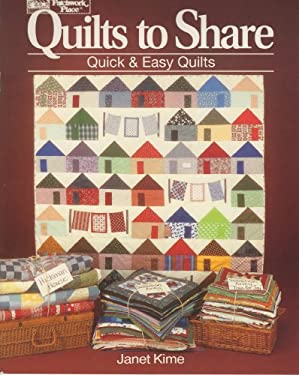
 This Scrap Happy Day I am sharing my start for my Textile Tales book for June. These little books are great for putting small scraps to use. This time I'm using Janet Kime's book Quilts to Share as my inspiration. 

https://images.bwbcovers.com/094/Quilts-to-Share-Quick-and-Easy-Quilts-Kime-Janet-9780943574790.jpg 

This is an older book, published in 1991 by That Patchwork Place. It's one of many in my library I've had to have taken apart and individual pages put in archival sleeves to protect myself from the particulates/fumes that emanate from the ink or paper. It's the source for the cat block I've used for quilts in the past

 Most recently I've had this quilt from the book on my mind:


 What if I made the cover for my book like that?


 I didn't get as much variety in strip widths but I was also working at a much smaller scale. This cover piece measures 8.25" x 4.5." I worked strictly out of my bag of scraps that are less than 1.5" wide. 

I used the sew and flip method to secure the strips to batting and the piece of fabric for the inside of the cover. 


 This is a Mary Lou Weidman print. A major part of the book is dedicated to sharing how to organize the making of scrappy community quilts (quilts to be donated to a charity) within a quilt guild or group. So I felt the print of "quilt ladies" would be most appropriate to include. 😊

I have also constructed one half of one signature for my book. Out of scraps of course.


 This 7" x 4.5" unit will eventually make up two pages in my book. I have an idea for the center spread based on the little house quilt blocks in Janet's book. After that I don't know what will come next. The cat block will not work at this small scale or the square format of my pages. The Textile Tales books are not meant to be exact replicas of the inspiration volumes by any means. Just a jumping off place. 

I try to keep a stack of scrap patches near the sewing machine to sew together inbetween the seams of other projects. These are the blocks I've built over the last month or so:


 One of these days I really need to do something about the drawer FULL of 6" Hole in the Barn Door blocks (also known as Churn Dash blocks). It's getting so I can't easily put any more blocks in that drawer. 

Scrap Happy Day is hosted by Kate of Tall Tales from Chiconia on the 15th of each month. We have a new participant joining us this month. Welcome Wizzy!  

KateEva, Lynda,
Birthe, Turid, Tracy, Jan
Moira, SandraChrisAlys,
ClaireJeanDawnGwen,
Sunny, Kjerstin, Sue LVera, 
Ann, Dawn 2, Carol, Preeti,
Viv, Karrin,  Alissa, Tierney,
Hannah, Maggie and Wizzy 


Friday, June 5, 2026

Textile Tales #5

I'm a little slow to share my May textile book with you. Better late than never I hope. 😊 

I didn't have a specific book to use as inspiration this time around. I might have had if I hadn't thinned out my library before now. Suffice to say I used my collection of African prints for this one. I'm calling it African Tails and Textiles.  


On the front cover I simply did a bit of outline stitching around the warrior and the shield.  Then I couched a chenille yarn around that patch. 


The inside of the cover is a single piece of fabric. It's pretty tightly woven, making it less fun to stitch through, so I just put some tiny upright crosses in the sky area. A lot of the stitching in this book is very simple.


The black lines on the print behind the cheetah were stem stitched with black floss. I used a green perle cotton to overstitch the green markings in the print in the lower right corner of the right hand page. 

 This is the center spread. The background is a single print. I didn't bother with any stitching other than what was necessary to applique the animals in place. 


Again, I only outlined stitched the face in the center of the upper half of the left page then put some straight stitches in the orange background behind the rhinoceros. African trade beads were strung to dangle from the button in the top corner of that page. On the left are a few more beads and another button (lower right corner). 


The final page has four more buttons and a few Colonial knots. There are some straight stitches in the yellow area at the bottom of that page. Opposite that is the rest of the blue print from the inside front cover. Then a string of African trade beads separates the blue from the next patch. The light batik print is folded over the edge from the back cover.  


The back cover probably has the most stitching of any page in this book. It was no easy feat to stitch with a black thread on that black background around the figures in the central patch. At least, not for my aging eyes! It's basically echo quilting. There is a layer of thin batting between the cover pieces. 


Here's the outside of the book open flat. I had more trouble stitching up the spine of this book than I've had with previous volumes. Not sure why. There are some tightly woven fabrics, and it's possible I ran into knots or stitches in some of the pages. I'm happy to have it done finally and am pleased with the result. Now it's on to my Textile Tales book for June! 

In case you weren't aware, I've been making one book per month since January of this year, following along with the Roxy sisters on YouTube. Their project ends with book six. I may very well carry on for the rest of the year as I'm finding this a great way to use up little pieces of favorite prints and treasures that I can stitch in place.


Wednesday, April 15, 2026

Scrap Happy in April

 I've got another little book to share with you. This may have been my very first attempt at a fabric book, inspired by Susan Taylor Brown's "just because" books. Other books have been started and finished since I embarked on this one.   


 This book is about 3.25" wide and 5" tall. I only used things I found in my stash. The challenge was to see what I could do in a black and white palette. The 'Liberty' tag was cut from a silk tie. The buttons are vintage. I had fun playing with my buttons in this book. 


 I tried to use a variety of fabric types. The eyelet on page 2 is a little pocket. The black flower next to it is a crochet piece as is the white flower on the next page. 


 More labels from neckties on page four. The number 2 and the spiffy fella on page 5 were cut from quilting cottons. I used this book as an opportunity to feature some laces along with everything else.  


 After I'd added the mouse (from another quilter's cotton), the strip of crochet and the fibers I couldn't bring myself to do any additional stitching on this center spread. I really like being able to read the words that were printed on the cotton along with the images of cookie dough on the cookie sheets. 


 More labels. Then I fell into spooky mode. 


 On the upper left of the back cover is a waterfall of scrap patches. 

 I used this book as a learning experience. That's one reason it has taken so long to get it to a finished state. I'd get stuck, not knowing what to do next. Then I'd come across someone else's approach or technique and give it a try. I've learned what I enjoy doing and what doesn't appeal to me so much. 

Here are the links for other bloggers who generally participate in this blog hop.  😊

KateEva, Lynda,
Birthe, Turid, Tracy, Jan
Moira, SandraChrisAlys,
ClaireJeanDawnGwen,
Sunny, Kjerstin, Sue LVera, 
Ann, Dawn 2, Carol, Preeti,
Viv, Karrin,  Alissa,
Hannah and Maggie  


Wednesday, April 1, 2026

Textile Tales Book 3

 I used Rachel Ashwell's book My Floral Affair as inspiration for my third effort in Roxy's Journal of Stitchery Volume 9. I also used it as a place to feature some of the embroidered corners of the vintage hankies I've been collecting. 😊 But it was a hand towel that became the outer cover for the book.


 I decorated it with short bits of lace. 

The stitching on the back cover started as a way to make the back long enough when I accidentally cut it too short. I added on another piece of the towel with herringbone stitch then added a row of blanket stitches and another row of herringbone to balance it out. Oh, and I added a couple more of the lazy daisy flowers and leaves to fill up he back cover. 

I used a quilting cotton for the inside of the covers. There's a layer of thin cotton batting between the two layers. 


 All the flowers (and the leaves on the inside front cover) have been fussy cut from vintage hankies and raw edge appliqued in place. On the first page I used the corner of the hankie to save the scalloped hem and seed stitched the background area with tiny upright cross stitches. They've become my favorite way to give a background texture.  


 On the left hand page of this spread I used a green cotton print under the hankie pieces to give more a feel of a garden. I used detached chain stitches (lazy daisy stitches) to fill the background and give a further impression of leaves. The yellow on the next page was from a linen handkerchief. I added to the foliage on the upper half with some fern stitches.

Here I've used another corner over a burgundy cotton. I outlined the flowers and big white-on-white leaves, securing the hankie to the cotton with those stitches. 


 This is a linen and Battenburg lace doily that was hand dyed (but not by me). This is the center spread in my book.


 This page on the right was the last one I worked on. I was able to purchase the lacy pocket and the little pots of daisies from the same lady the pink doily came from. I used this pocket to hold a tag with the documentation I'm trying to include with each book.


 Next we have more of the yellow linen with another corner laid over top. I've simply stitched around the flowers again. On the right I appliqued pieces from two different hankies, once more preserving a shaped corner.


 The final page features a rose and rosebuds, again from two different hankies. 


 When I made the cover I added a square of a plaid I particularly like, intending to use it for documentation. I'd forgotten about that when I found the lacy pocket and was anxious to complete the book pages. 😉 I didn't add the crocheted flower until the very end. 

 And that closes the book for March! 


Monday, March 9, 2026

Textile Book Number 2

Honestly, I meant to do this a week ago! Life sure has a way of subverting plans.

I'm following along with the Roxy sisters and Volume 9 of their Journal of Stitchery project. Not that I'm adhering strictly to the brief, but I am trying. The idea is to use a physical book as inspiration for a textile book. For February I went with a genre rather than any specific title. I'm calling my book Tales From the Macabre. 😁 

It all began with a beautiful vintage hankie. Black, with cutwork outlined in white. I'd never seen such a thing until I found it on eBay. Fortunately, I didn't have to pay through the nose to get it. For the cover of my book I laid a piece of purple cotton underneath the cutwork. I used black batting to pad the cover. 


The hankie was a bit too big for the size I wanted my book to be so I had to make a pleat where the spine would be. In the end I was able to decorate the spine with some crinkled seam binding and beads so the pleat disappeared. 


 I used a piece of hand dyed (not dyed by me) crochet to create a pocket on the inside front cover. Then I made a tag from an Edward Gorey note card to give me a place to write my documentation.

 The haunted house was cut from a quilter's cotton and surrounded with a piece of gathered black lace. Actually, several pieces from my quilting stash were used to create the pages of my book.

The cat is a flat back embellishment I was able to couch in place. I left the adder alone. That page has next to no stitching on it in fact. I used a spider charm and a bat button on the next page. The skeleton was cut from a twill ribbon that I tea dyed. 


 This is the center spread of my book. I was able to use a third corner from the hankie here which pleased me very much. I still have the fourth corner to use somewhere else. Those are tiny black star sequins held in place with a bead scattered across the background areas. 


 The crescent moon is a sequin and the flowers at the bottom of this last page are paper on top of a strip of lace, secured with a matte flower sequin and a bead. The background is scatter stitched with a thread that is virtually the same color as the fabric. The pocket on the inside of the back cover was made with a piece of vintage lace. So far it remains empty.


 And finally, the back cover. All of the stitching on the cover was done with a purple Sulky cotton petite thread. The purple on black about did my eyes in. I used Sulky threads and occasionally a size 12 perle cotton throughout. Three strands of floss to blanket stitch the pages together. Overall my book measures 3.75" wide and 4.5" tall. The idea is to keep the books all the same size but this one turned out a bit larger than my book of feedsack fabrics. I think my feedsack book is going to turn out to be the smallest in the series actually. It was the first one, and I learned along the way. 

My book for March has been started. It will pretty much be the polar opposite of February's book. But then, February was not at all of a piece with January!  


Sunday, February 15, 2026

Scrap Happy in Febrruary

I have been following Rachel and her sister Sarah of Roxy's Creations on YouTube since they instituted the first Journal of Stitchery project. I don't think I've ever actually started and finished any volume of the projects they proposed but I found them inspiring. They introduced volume nine in December and stitching began in January. It's looking like I will come closer to fulfilling their briefs this time around than any previous version. 

The suggestion was to choose six books - fiction or non-fiction - to inspire the creation of six textile books, one per month. We are free to make the books any size we like, as many pages as we want, any techniques, etc. I thought long and hard about the books I might use for inspiration. In the end it's looking like I will be more inspired by the idea of a book, the subject matter, rather than any specific title. For example, in January I knew I wanted to use the scraps of feed sack fabrics I still have in my possession. I feel like I used to have a book about feed sacks, or the quilts made during the Great Depression using feed and flour and grain sacks, but I can't find any such title on my shelves. (I have had to weed out books that are too toxic for me to peruse safely.) Nevertheless, I know such books exist.

I confess to buying a piece of vintage feed sack off a vendor on eBay. Otherwise I used only the scraps and remnants I had on hand. I also tried to incorporate buttons and rick rack that seemed of the era.


 My book measures roughly 3.5" wide by 4" tall closed as in the photo above. The flower on the cover is what most folks consider the back side of a yo-yo or Suffolk Puff (which I personally prefer to the gathered side) on top of a rescued crochet medallion with rick rack for stem and leaves. I outlined the yo-yo with perle cotton.  All the edges of the pages have been blanket stitched with 3 strands of embroidery floss. 

Inside the front cover I fussy cut and raw-edge appliqued the rose from one feed sack print. On the opposite page I appliqued a crocheted Colonial Lady that I liberated from a vintage handkerchief. There are scattered single chain stitches in the background around her. 


This spread features just about the last pieces I have of the white with the pink rosebud print and the yellow patch with the two young ladies doing housework. I scattered pink Colonial knots on the pink patch. There are red upright crosses on the turquoise patch. The other patches have been seed stitched. 


This is my center spread. Those are vintage buttons on the yellow patch. There are blue stars embroidered above the little girl on her vehicle but the rest of the stitching is all straight stitches done to blend into the backgrounds.


 More simple straight stitches on these two pages and one vintage red button. I really wanted to showcase the prints so I have not added a lot of embroidery or other embellishments. I used the letter buttons in place of a title or a reference to a specific book.

This final page features two more patches that are the last of their kind: the white with the flowers and the blue floral print. Inside the back cover I used rick rack again to frame the motto of the era I was trying to honor. I simply wrote with a Micron pen on a square of muslin for that. There's another bit of crochet secured with a button to dress that up a bit.

This is the back cover. A little bit of feather stitching on either side of another "upside down" yo-yo, a vintage laundry label, and a strip of rick rack. The initials on the laundry label are not exact but they remind me of the name of one of my great-grandmothers. 


 Finally, in lieu of the title of a book on the spine and as a way to document what this project was I cut a piece of cardstock, punched a hole in it, wrote on it and stitched it in place, leaving the thread long enough to make a bow. 😊  

Thus my entry for February's Scrap Happy Day, which is hosted by Kate over at Tall Tales from Chiconia on the 15th of each month. To see what other participants have done with their scraps or leftover materials recently just click on the links below.   

KateEva, Lynda,
Birthe, Turid, Tracy, Jan
Moira, SandraChrisAlys,
ClaireJeanDawnGwen,
Sunny, Kjerstin, Sue LVera, 
Ann, Dawn 2, Carol, Preeti,
Viv, Karrin,  Alissa,
Hannah and Maggie


Wednesday, January 28, 2026

No Kings Since 1776

 I've been using my needle and thread to help me cope with what's been going on in the United States of America. I shared this little book a few months ago, when it was still in the works. It is now complete.


 I have ancestors who participated in the original American Revolution. 

Most of the men in my family have served in the military through the generations. 

I firmly believe in the principles that were the foundation of this nation.

I wish I could do more to fight in this new American revolution.

So I turn to fabric, needle, and thread.